
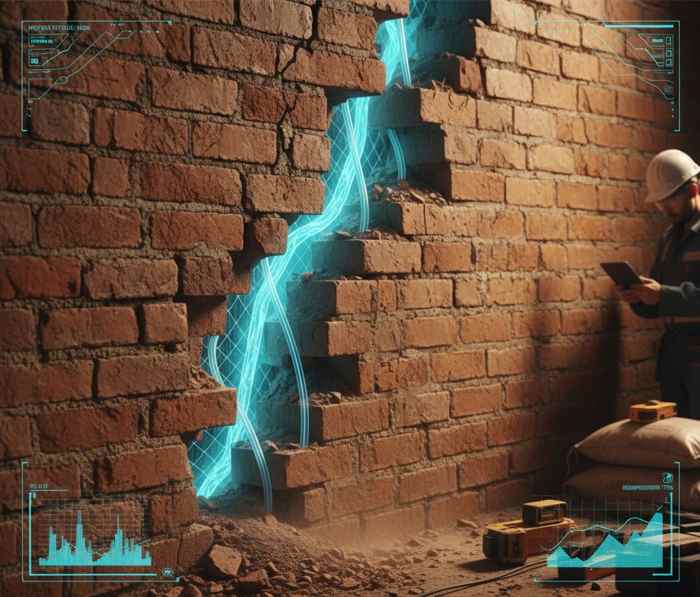
While modern concrete monoliths are known for their flexibility, traditional brick (masonry) buildings react differently to high-impact vibrations and shockwaves. In cities like Kherson, where brick housing makes up a significant portion of the residential sector, understanding these unique destruction patterns is vital for proper restoration.
Why Brick Walls «Crumble» Internally
The main problem with brick buildings isn’t always the visible hole from a strike. It is the loss of mortar integrity.
- The «Sand» Effect: Repeated vibrations turn old cement-lime mortar into dust. The wall may look solid from the outside, but it loses its load-bearing capacity.
- Vertical Fractures: Unlike panel buildings, brickwork often develops deep vertical cracks that follow the mortar joints, effectively «splitting» the section of the house.
Materials for Effective Restoration
To restore a brick building to safety standards, traditional «plastering» is not enough. Experts recommend:
- Chemical Anchors and Injection: Pumping specialized epoxy or cement resins into the micro-cracks to bind the bricks from the inside.
- Reinforcement Mesh: Using high-tensile steel or composite meshes before applying the new facade layer.
- Hydrophobic Coating: Damaged brick becomes porous and absorbs water rapidly, leading to mold. Professional sealants are a must.
Lessons from the Field: Old vs. New Masonry
Older brick buildings (pre-1950s) often show more resilience due to thicker walls, but they require much more attention to mortar restoration. New brick buildings are faster to repair but more prone to total wall displacement.
Conclusion Restoring brick heritage is a balance between preserving history and ensuring structural safety. For investors and homeowners, the focus must shift from «cosmetic fixes» to «structural bonding.»